I recently read that the average lifespan for a person diagnosed with schizophrenia is 69 years. That’s a whole decade less than the average American life span. Mental illness cascades into physical illness for many reasons. Those who have trouble functioning in the world are less likely to get preventative care, more likely to live in unsafe or unstable conditions, and highly likely to abuse alcohol and drugs. My mom has been living with the destabilizing effects of schizophrenia for decades, but somehow she has beat the odds and made it to 75. Now, I’m not sure if she will see 76. How many lives does she have left?
Early lives (1-3) and Ted Bundy

The first time my mother almost died she was eight years old. A case of the measles spread to her brain stem and caused a seizure. She stopped breathing and turned blue on the kitchen floor, but somehow she was revived and hospitalized for weeks. In the hospital, she rolled around the ward in a wheelchair making friends with all the nurses. She recovered totally, but the assault on her brain may have had long term impacts.
I don’t know about any brushes with death in her teen years, but in her early twenties two events shook her stability even further. She took a summer job at the local mill like all the hippie kids in the early 1970s. Like all newbies, she was assigned to “the hog” which chips logs (and sometimes human limbs) into pulp. Operating it required climbing a rickety ladder and guiding logs into the teeth of the machine. Her first day on the job, she heard herself scream (but she was not screaming). That was the first time she heard something no one else did. Thinking that it was a kind of premonition she quit her job on the spot and evaded whatever fate “the hog” held for her.
A few years later, she escaped death again when she was attacked by Ted Bundy (or a Ted Bundy wannabe). It was a snowy night in early 1975. She was walking home from her job at the local health food store, carrying a bag of groceries and a Snoopy doll she had picked up for me. I was three and staying at Grandma’s house while Mom worked. She opted to walk down a quiet residential street. No one else was out walking in the fresh snow, so she noticed the lone figure up ahead right away. She thought he was acting strangely but couldn’t quite say why.
The shadowy figure crossed the street and approached her. She got a bad feeling and noticed he was holding one arm behind his back, but my mom is friendly so she smiled and said, ‘hi.’ The man greeted her and asked if she knew the way to a certain address. The street he named didn’t sound familiar, so she apologized and turned away to walk toward the Main Street where there were more lights and people. Feeling bad about brushing him off, she started to turn back to wish him a good night. That’s when he brought the crowbar down full-force on her skull.
Because she was turning, the blow was glancing and did not knock her out. She dropped to her knees and screamed at the top of her lungs. Curtains twitched open on nearby houses and Ted Bundy (or whoever) took off at a sprint. Mom struggled to her feet and rang the nearest doorbell with blood streaming down her face. They called an ambulance, saying they thought she was in a car accident.
She had a concussion (another assault on her brain), and there was a small piece about the incident on the front page of the local paper the next day. I vaguely remember her walking into Grandma’s house with a bandaged head. They never caught the perpetrator, but Ted Bundy was stalking women from Utah to Seattle in that era and liked to knock them out with a crowbar.
Inner lives (4-6)

During my childhood, the primary threat to my mom’s life came from within. Her mental illness includes deep depression and manic episodes on top of hallucinations and delusions. During early adulthood she was frequently suicidal. From the time I was about four I was training as a suicide prevention counselor. Not having the greatest boundaries, she regularly talked to me about her suicidal ideation. I calmly explained all the reasons to stay alive. Didn’t she want to work on her art? To walk outside in the trees and talk to the birds? Yes, she did, she admitted through tears.
She actually attempted suicide a handful of times. I was aware of one wrist-slashing event when I was about ten, but she said there were other attempts with pills and razors. I was living with my grandparents and only saw my mom on weekends when she was well enough, so I missed out on most of her crises before I was twelve when my Grandma died and I had to confront my mom’s mental illness up close.
The year after Grandma died, Mom disappeared and lived briefly on the streets of Spokane. I was staying with my aunt and uncle, and for nearly a year we did not know where my mom was. While she did not come to any physical harm while surviving as a homeless person, anyone in that position is at risk. Between the elements, lack of food and water, and vulnerability to violence, homeless people cheat death every day they are able to stay alive. Mom was lucky to find some kind people to let her stay in their guest room, but soon enough she was suicidal again and landed in the state mental hospital.
Coeur d’Alene, Idaho was not a dangerous place in the seventies and eighties, but my mom was attacked a second time when I was in high school. By that time, my grandma had died and I was living in a rental house with my mom. I was doing the teenager thing and often spent nights out with my friends. After one of those nights I came home in the morning to find my mom frantic. She thought I had been abducted by the man who came in through a window and tried to rape her.
I had left after midnight, and left my bedroom window open as I always did on warm summer nights. That’s how the man with the stocking over his head entered the house. The front door was probably unlocked, but rapists prefer windows, I guess. He crept into my mom’s room where she was sleeping on her futon on the floor and put a hand over her mouth.
She was obviously freaked out to be awakened by a man with a stocking cap over his face but she froze and lay still while he tried to rape her. Maybe the lack of struggle was a turn-off, but he was unable to get it up. After a few minutes of his vain attempts, mom spoke between the fingers of his gloved hand, “Want a cigarette?”
He paused, then said, “Sure,” and rolled off of her. He pulled up the stocking enough to smoke. After a few puffs he said, “You seem like a really nice person. I’m sorry I did this to you.” Then he asked if he could leave through the front door and disappeared back into the night. There were a few more home invasion rape attempts in the area until the perpetrator was caught a couple of months later. I kept my window closed at night after that.
Extra lives (7-8)
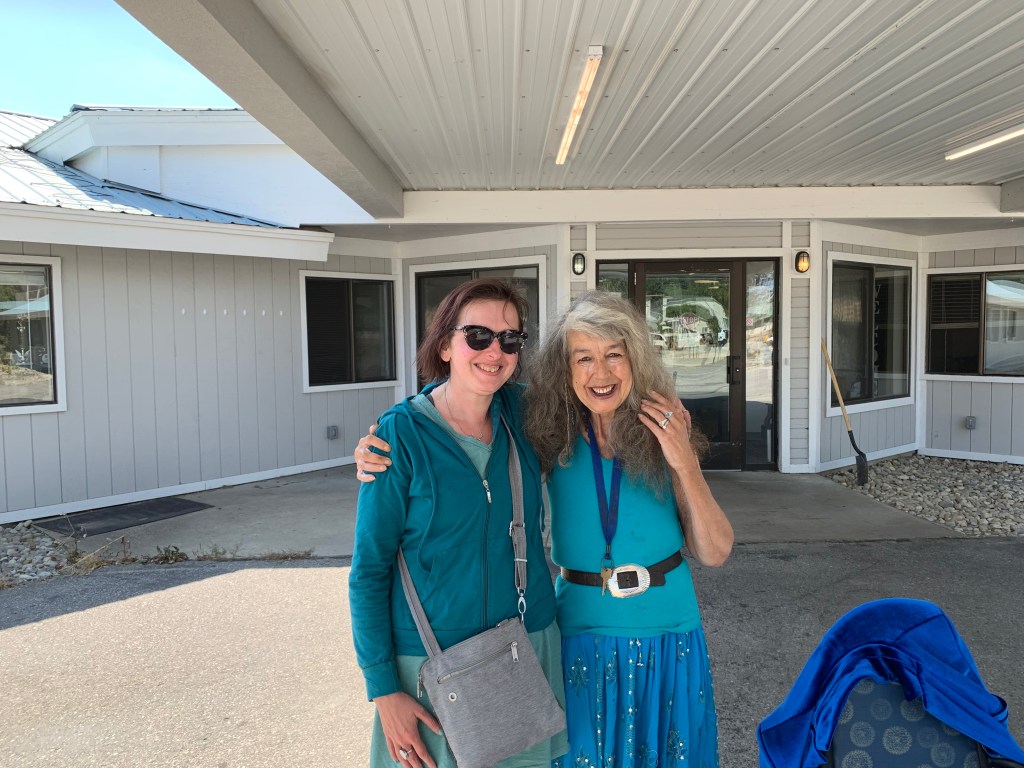
I left Coeur d’Alene as soon as I graduated high school. By then, Mom had been through multiple institutionalizations and seemed to be relatively stabilized on a combination of anti-anxiety and and-psychotic drugs. She hadn’t been able to work for years and relied on state disability and SSI to get by. For nearly a decade, she was living mostly independently and out of imminent danger.
But eight years after I moved away, she developed Myelodysplasia, a blood disorder that turned into Leukemia. The anti-psychotic drugs she had taken for eight years caused changes to her blood cells. She had to start chemotherapy, which kept her Leukemia at bay for a bit, but without a bone marrow or stem cell transplant she would not survive long term. However, she refused to travel to Seattle to get such a treatment.
After her first round of chemo, she got on the list for a clinical trial and started an experimental treatment. Her body did not respond well. I got a call from my Grandpa that she had been hospitalized and was not doing well. By the time I got there, her organs were shutting down and her doctor told me he was not hopeful that she would make it out of the hospital. I started the process of pre-grieving and got used to the idea that I might lose my mom. The cold comfort was that her torment would finally be over.
But she didn’t die. Within a couple of days her organs started to recover and she became a handful for hospital staff as she tried to get out of bed constantly to try to eat things she wasn’t allowed to eat. I could tell she wasn’t dying anytime soon by the time I left to go back home.
She survived another year or so on chemo before she reached a critical decision point. She needed a stem cell transplant or she would die. Somehow, the medical professionals cajoled her into traveling to Seattle and going through a four month process. First, she would need to go through a battery of tests to make sure she was strong enough to handle the treatment. She passed them all. She was in her fifties at the time and normally 50 is the cutoff for a stem cell or bone marrow transplant.
Once cleared for treatment, she was admitted to UW Medical Center to start a chemo regimen that would effectively kill off all of her blood cells. On the day of her scheduled transplant Seattle experienced a nearly 7.0 earthquake. Ironically, her main phobia about coming to Seattle was the possibility of an earthquake. We all assured her that was unlikely, but we were wrong. She was fine in the quake, but her stem cells got stuck in Portland because the airport closed. The medical courier had to rent a car to drive up with the cells and her treatment took place in the middle of the night.
The following week was touch and go. Only 25% of people who receive this treatment survive it. Once again, I braced myself to lose my mom. But once again she didn’t die. Soon enough she was up out of bed and walking laps around the hospital ward. She spent another month in a nursing facility then went home to Idaho as good as new. Her Leukemia was cured.
After her stem cells transplant, she lived in a cute apartment near downtown Coeur d’Alene and was able to be mostly independent with the help of some home care providers. She was on a new medication and for about a decade she was stable and living a nice life, working on her art and walking downtown to buy crystals and tobacco. Then she went off her medications.
Her behavior became erratic and she started leaving lit candles outside her apartment door and writing on walls. Her care workers tried to convince her to go to the psych unit to get her meds rebalanced but she refused. Instead, she walked into a neighbor’s house and stole their cat. Eventually, someone called the police and they hauled her off to the state mental hospital. She lost her apartment and cut off all contact with her family, including me, thinking we were somehow working against her. For almost a decade, we did not speak.
She was shuffled from one assisted living situation to another and eventually made her way north to Sandpoint. She was in her assisted living facility there during the Covid pandemic, and being locked in only fueled her agoraphobia. By the time I got back in touch with her in 2021 she was unable to go out to appointments or travel farther than the end of the block. She told me that she had nearly starved when she moved in to the facility because the food was so bad. She was put on an emergency Ensure and peanut butter diet. I started sending her boxes of canned soups and salmon to try to keep her alive.
The ninth life

In the week before Christmas this year she came down with the flu. She started having trouble breathing and falling down. She’s stubborn and would not get in a car to go to the hospital. By the time they finally got her there she had pneumonia which had caused a blood infection. Her heart was I atrial fibrillation and her kidneys were failing. A couple of days after she arrived at the hospital she went into respiratory arrest and had to be put on a ventilator. I got a call on Christmas Day to let me know that once again she might not make it out of the hospital alive. Once again, I braced myself to lose my mom.
After talking to her ICU doctor, I gained a bit of hope. He was encouraged by how her stats were improving after a day on the ventilator. She was stable and seemed like she might survive after all. When I arrived at the hospital on Boxing Day I was less sure. She was on the ventilator and coming off of sedation, but she was unresponsive. They couldn’t try to take her off the ventilator until she was awake and responsive. They put her back under sedation for the night and tried to wake her again the next morning. This time she started responding, and they were able to get the tube out and let her breathe on her own. She still needed oxygen support, but she was holding her own.
They stopped her psych meds because of her heart and kidney issues but they tried adding them back after she was off the ventilator. Unfortunately, the drowsiness caused by the meds made her stop breathing again and the ventilator tube went back in on the day I was supposed to fly back to Seattle. I extended my stay. After her meds wore off they took the tube out again, and she was much more awake but now officially off her meds. By the next day, everything was improving, but she was going into trances and experiencing apparent demonic possessions.
Her intense psychiatric symptoms calmed down after a couple of days, even without her normal meds. Now, the main issue to worry about is a bad case of critical myopathy. She is extremely weak, and at this point cannot stand or do much on her own. If she doesn’t improve a lot in rehab, she may need to live permanently in a nursing home. About half of the people who develop myopathy in the ICU recover fully. The other half do not have a very good quality of life and may not live very long.
We now have the specter of a grave physical disability on top of her psychiatric and cognitive issues. I’m worried that she will need to move to a more hardcore nursing facility. She currently lives in assisted living with limited medical support. She’s always been able to be mostly independent despite her schizophrenia.
I’m hoping the next few weeks will bring great improvements, but I don’t know what to expect for her long-term prognosis. Only time will tell.
 Plumb Wonderful